After 17 deaths, Jharkhand struggles to contain rogue elephant
The elephant has been moving in a circular pattern of nearly 110 kilometres, striking villages at night and retreating into dense forest cover by day.
Jharkhand is set to establish the country’s first dedicated Human-Elephant Conflict Research Centre at the Palamu Tiger Reserve to study rising human-elephant conflicts and develop scientific solutions to reduce casualties and habitat tensions.




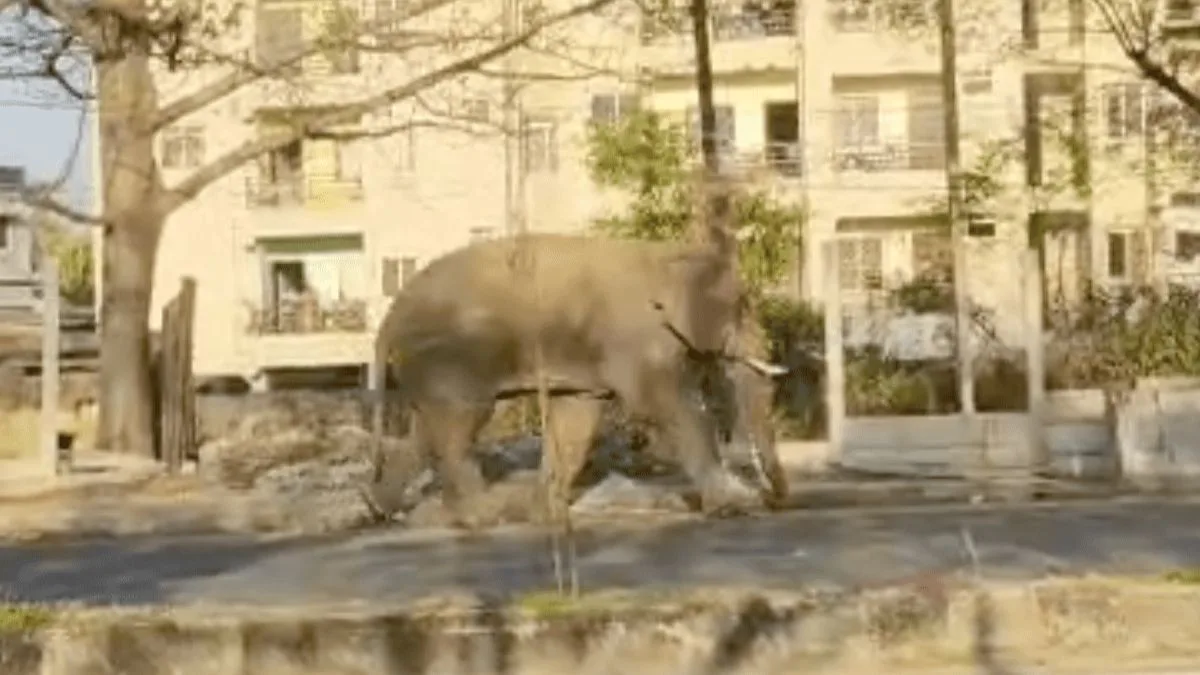
Photo: SNS
Jharkhand is set to establish the country’s first dedicated Human-Elephant Conflict Research Centre at the Palamu Tiger Reserve to study rising human-elephant conflicts and develop scientific solutions to reduce casualties and habitat tensions.
The proposed centre will come up on nearly 20 acres of land identified between Palamu Fort and Kamaldah Lake within the reserve area. The project proposal has been prepared by the Jharkhand government and submitted for further approval.
Advertisement
Officials said the centre will analyse behavioural patterns of elephants, conflict triggers, herd movement, habitat stress and human responses using scientific tools and Artificial Intelligence (AI)-based systems.
Advertisement
The facility is also expected to function as a long-term decision-support and policy research centre for states facing recurring human-elephant conflict.
Deputy Director of Palamu Tiger Reserve Prajeshkant Jena said the project would initially begin with detailed studies on four domesticated elephants currently maintained by the reserve after restrictions on commercial use of elephants.
Researchers will study elephant behaviour during conflict situations, mating periods, childbirth, seasonal changes, communication signals, food and water movement, and reactions to danger or environmental stress.
According to the Wildlife Institute of India’s 2025 elephant status report, Jharkhand has 217 elephants, of which nearly 130 are found in Palamu Tiger Reserve, the highest concentration in the state.
Forest officials said Jharkhand currently has 17 elephant corridors and human-elephant conflict remains a major concern. More than 30 people have died in such incidents in the state since January this year, while 474 deaths were reported between 2019 and 2024.
Officials said surveys have also revealed that nearly 80 per cent of conflict-related deaths occurred outside forests and designated elephant corridors, indicating increasing interaction between humans and elephant populations in inhabited areas.
Advertisement